The Iceland Car Rental Travel Blog
Fuel station automated machine in Iceland

Fuel Stations in Iceland: Location, Prices & More

A road trip around Iceland makes for an unforgettable adventure, but if you don't plan well, your experience might be compromised. You don't want to be left stranded if your tank runs empty, or have to pay our service fee when you return our hire car without a full tank of fuel.

But when driving in a different country, there's so much to consider. Where are Iceland's gas stations located? How much does fuel cost? Which stations offer the best value? What payment methods work at self-service pumps? This comprehensive guide covers everything you need to know about petrol stations in Iceland, which operate quite differently from stations in the US, UK, or other European countries.

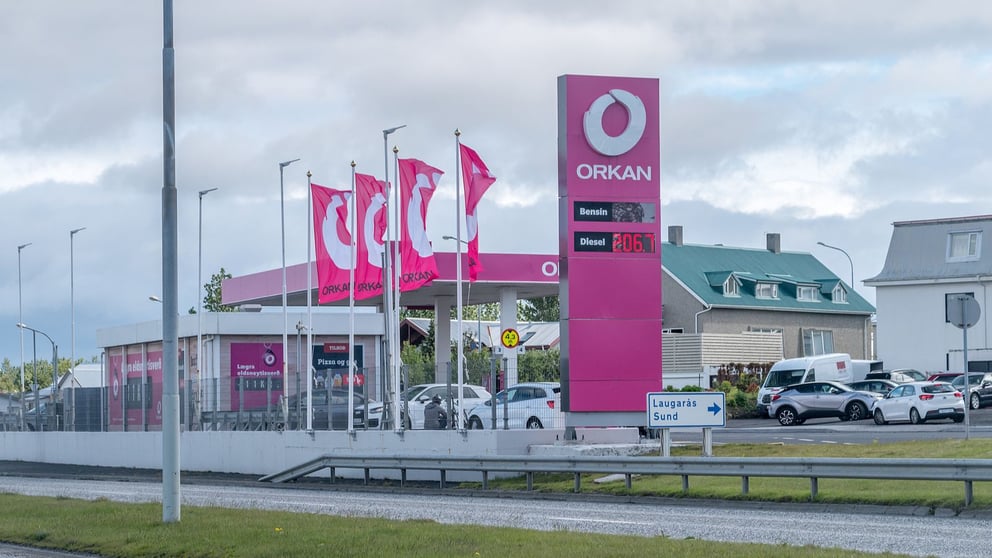
Orkan petrol station in Iceland.

Understanding Iceland's Fuel Station Network

Iceland has four major fuel companies serving the country: N1 (the largest network), Orkan, Olís (which merged with ÓB), and Atlantsolía. Together, these chains operate over 200 stations across the country, from bustling Reykjavík to remote villages in the Eastfjords. While this might sound limited compared to larger countries, Iceland's compact size means you'll rarely drive more than 100 kilometers (62 miles) between fueling opportunities along main routes, unless you’re in the Highlands!

Each fuel company has its own character. N1 stations often feature the most comprehensive services, including hot food counters, grocery sections, and car wash facilities. Orkan typically offers the most competitive prices with predominantly self-service stations. Olís strikes a balance with good pricing and substantial convenience store offerings. Atlantsolía operates primarily in the greater Reykjavík area and South Iceland, known for straightforward service and competitive rates.

Current Fuel Prices in Iceland

Fuel in Iceland isn't cheap. As of January 2026, expect to pay around ISK 315-326 per liter (approximately $2.25-2.32 USD or £1.76-1.82 GBP) for petrol, with diesel slightly higher at ISK 320-340 per liter. Don't be surprised when the price tag is higher than you expect, even when filling up a tank on a small city car. 

Why are fuel prices high in Iceland?

The country imports all petroleum products, and the costs reflect transportation, taxes, and Iceland's remote location. However, prices do vary between stations and regions. Generally, you'll find the lowest prices at Costco (if you have a membership) and Orkan stations, followed by Atlantsolía and ÓB. N1 and Olís tend to be pricier, though they often justify this with superior amenities and services.

For real-time price comparisons across Iceland, check bensinverd.is before your trip. This invaluable resource shows current prices at every station, helping you plan fuel stops strategically.

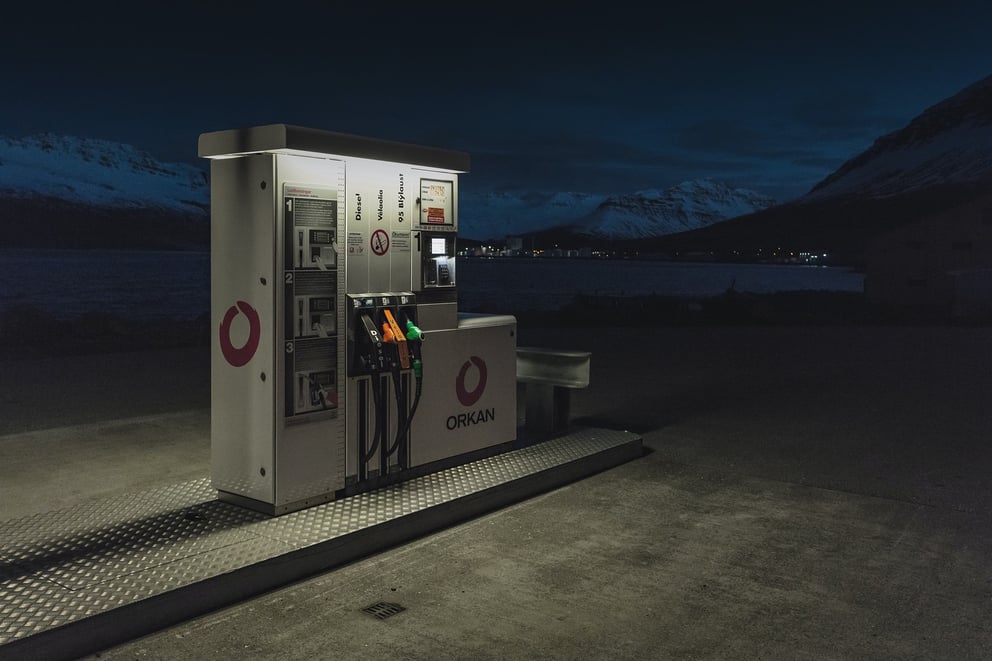
Self service petrol station in Iceland at night

Fill Up Early and Often

In most regions, you'll find that there are plenty of petrol stations around the country, but depending on where you're traveling, that may not always be the case. The best method to avoid running into trouble is to top up your car whenever you drive past an available petrol station.

If you plan on having a long day out exploring, you might not see another station for a long period of time, particularly when travelling on Iceland's F-Roads in the Highlands. The Highlands have no fuel stations whatsoever - you must carry extra fuel in approved containers if venturing into these remote regions. Along the Ring Road, stations typically appear every 50-100 kilometers (31-62 miles), but in the Westfjords and Eastfjords, gaps can exceed 150 kilometers (93 miles) between towns with fuel. Even though you might not think it's worth it, taking the opportunity to actively fill your tank could save you from having to detour later in the day or finding your petrol warning light flashing in the middle of nowhere.

How to Fill Up at Iceland Gas Stations

When stopping at a full-service petrol station in Iceland, you'll find the process similar to anywhere else in the world. You can either fill up your own car using the pump (usually a green handle for petrol, black for diesel - note this color coding differs from US stations, where green typically indicates diesel) or, at some stations, someone will fill up for you. You'll then need to enter the kiosk to pay for the petrol you have purchased.

Navigating Self-Service Stations

You may be surprised to discover a number of unmanned petrol stations in Iceland. This becomes increasingly common when you leave built-up areas and are driving around Iceland for days at a time. The self-service experience can be daunting for first-timers, but follow these steps for smooth operation:

  1. Insert your credit or debit card with a 4-digit PIN into the payment terminal
  2. Select your preferred language (English is always available)
  3. Enter the pump number you're using
  4. Choose your payment amount (avoid 'Fill Tank' option as it places a large hold on your card - select a specific amount like 10,000 ISK ($85 USD) instead)
  5. Remove the nozzle and begin fueling
  6. Return nozzle when finished - you'll only be charged for what you actually used

Critical payment tip: Many foreign credit cards that don't require PINs at home won't work at Iceland's self-service pumps. Before your trip, contact your card issuer to set up a 4-digit PIN. Alternatively, consider purchasing a prepaid fuel card from a staffed station - these work at all self-service pumps and can be topped up as needed.

Remote petrol station in Iceland during a snowstorm.

Make Use of the Services

Fuel stations in Iceland are really convenient, and a number of them offer a variety of services, from food options to restrooms, shopping, and vehicle washing. Making use of these services can make a big difference in your Icelandic road trip experience!

Food and Drink

Snacks make a road trip. At most staffed gas stations in Iceland, you will find a convenience store where you can stock up on snacks like chips, protein bars, chocolate, water, juice, soda, and your typical car snacks. 

Some larger fuel stations will also have a cafe area on site, serving hot and cold drinks as well as food. Here you can enjoy favorites like Icelandic hot dogs, burgers, soups, sandwiches, pastries, and a good cup of tea or coffee. In more built-up areas, you might find that the stations offer a simple grill or fast-food counter with seating if you want to take a break from driving. 

Many people visiting Iceland actually find the food from these fuel stations to be high quality and more cost-effective than dining out at traditional restaurants. 

Restrooms and showers

Manned fuel stations almost always offer toilets for customers, and they are some of the most reliable places to plan regular, clean bathroom breaks on longer drives. In very remote areas, you may find only unmanned stations with no toilets, so it’s worth using the facilities whenever you stop at a staffed station. 

A small number of larger stations, particularly those that also cater to campervan traffic, offer pay-per-use showers, but this is never a guarantee. 

Vehicle cleaning

The roads of Iceland are known for leaving cars dirty. Dusty roads, muddy tracks, and salt spray, especially in winter, can take a toll on your vehicle. Many full-service stations in Iceland offer basic car care services, including self-service car wash bays, pressure hoses, vacuum cleaners, and air pumps, so you can tend to your car's basic needs.

The use of car washes and vacuums usually incurs a charge, but using the air pump is often free.

Shopping and other essentials

In addition to snacks and drinks, manned fuel stations in Iceland typically stock everyday groceries (think bottled water, basic fresh produce, bread, etc.). You can also usually find items that are handy for the road, like maps, ice scrapers, screenwash, and often small outdoor or hardware items. 

In areas more catered to tourists, you will often see small displays of local gifts and souvenirs, or even seating areas with free Wi-Fi or charging stations where you can take a break and power up your devices.

Iceland's Major Fuel Brands: What to Expect

N1 - The Largest Network

With 100+ locations nationwide, N1 dominates Iceland's fuel market. You'll recognize their red and white branding along virtually every major route. N1 stations typically offer the most comprehensive services - expect hot food counters, substantial grocery sections, clean restrooms, car washes, and often ATMs. While prices run slightly higher than competitors, the convenience and reliability justify the premium for many travelers. N1 also partners with major car rental companies, offering discount programs through keychain fobs or digital cards.

Orkan - Budget-Friendly Self-Service

Orkan operates 73 predominantly self-service stations across Iceland, distinguished by their bright pink branding. They consistently offer the country's lowest fuel prices after Costco - typically ISK 5-10 per liter cheaper than competitors. Stations are unmanned with 24/7 card payment availability. While you won't find hot food or extensive services, Orkan's competitive pricing makes it popular with budget-conscious travelers. Download the Orkan app for price alerts and station locations.

Olís and ÓB - Mid-Range Options

Following a recent merger, Olís and ÓB now operate as one network with 50+ stations. Their distinctive blue branding is common along the Ring Road and in most towns. Pricing sits between Orkan and N1, with reasonable services including small convenience stores, restrooms, and basic food options. The Olís discount card provides 3-5 ISK per liter savings plus free coffee - worthwhile for extended trips. All Iceland Car Rental vehicles come with an Olís discount key fob.

Atlantsolía - Reykjavík Area Specialist

Atlantsolía's 25 stations concentrate in greater Reykjavík and South Iceland. They offer competitive prices, particularly in the capital area, where competition keeps costs down. Expect basic but efficient service - self-service pumps, small convenience stores, and minimal frills. If you're primarily touring near Reykjavík or the Golden Circle, Atlantsolía provides good value. However, their limited presence makes them less useful for longer Ring Road journeys.

Costco - The Cheapest Option (With Membership)

Iceland's single Costco location in Garðabær (near Reykjavík) offers the country's lowest fuel prices - typically ISK 10-20 per liter below other stations. If you're a Costco member at home, your card works here. The savings can be substantial: filling a 60-liter tank at Costco versus N1 saves approximately ISK 1,200 ($9). Worth the detour if you're returning to Keflavík Airport, as Costco sits conveniently between Reykjavík and KEF. Note that weekend queues can be long.

Fuel Brands and Prices in Iceland: An Overview

Fuel Brand

Example price (per liter)

What to expect

Costco

~280 ISK

Typically the cheapest option near Reykjavík. Memberships from the US and UK are recognised.

Orkan

~285 ISK

One of the better value chains, with frequent discounts and unmanned pumps

ÓB (OB)

~285 ISK

The budget brand of Olís, typically priced at the lower end of the market

Atlantsolía

~310 ISK

Competitive unmanned stations, often cheaper than big full-service brands

Olís

~320 ISK

Full-service stations with shops and facilities, usually slightly higher prices

N1

~325 ISK

Very common on main routes, often at the top end of the price range but very convenient

Money-Saving Strategies for Fuel in Iceland

With fuel prices significantly higher than in most countries, smart strategies can save considerable money over a week-long road trip. Here's how to minimize your fuel budget:

Leverage Discount Programs

  • Ask Iceland Car Rental about included discount fobs - our vehicles come with Olís discount keys offering 3-5 ISK/liter savings.
  • Use your Costco membership if available - the Garðabær location offers the lowest prices nationwide.
  • Download the Orkan app for instant access to Iceland's cheapest self-service network.
  • Check bensinverd.is before major fill-ups to find the absolute cheapest nearby option.

Drive Efficiently

  • Maintain steady speeds around 80-90 km/h (50-56 mph) on highways - aggressive driving can increase consumption by 20-30%
  • Use cruise control on Iceland's long straight stretches - constant speed maximizes fuel economy
  • Close windows at highway speeds to reduce drag and use air conditioning sparingly
  • Keep tires properly inflated - many station air pumps are free, check pressure weekly
  • Remove roof boxes or racks when not needed - they significantly impact fuel economy

Choose the Right Vehicle

Vehicle selection dramatically impacts fuel costs. A small city car consumes roughly 5-6 liters per 100km (62 miles), while a large 4x4 uses 10-12 liters. Over 2,000 kilometers (1,243 miles), this represents a difference of ISK 18,000-25,000 ($150-207). Choose the smallest vehicle appropriate for your planned routes - if staying on paved roads and avoiding Highlands F-Roads, a 2WD car suffices and saves substantially on fuel. Consult Iceland Car Rental about vehicle fuel economy when booking.

Where Are the Petrol Stations in Iceland?

There are plenty of petrol stations across the country, with the majority focused near the capital city of Reykjavík and near the Golden Circle, as these are typically the busiest for vehicles in Iceland. Understanding regional availability helps you plan refueling stops strategically:

Greater Reykjavík Area

Over 80 stations serve the capital region, meaning you'll never search long for fuel. All major brands operate here with 24/7 availability at many locations. Competition keeps prices relatively moderate - though still high by international standards. Notable concentrations exist near Keflavík Airport, along Route 41 to Reykjavík, and throughout downtown areas.

Ring Road (Route 1)

Iceland's main highway features regular fuel stops, with stations typically spaced 50-100 kilometers (31-62 miles) apart. Key fueling towns clockwise from Reykjavík include: Borgarnes, Blönduós, Akureyri, Egilsstaðir, Höfn, Vík, and Hella. All have multiple stations with full services. N1 and Orkan dominate Ring Road coverage, ensuring you'll always find familiar options.

Remote Regions

The Westfjords, Eastfjords, and North Fjords require more careful planning. Stations exist in most towns (Ísafjörður, Patreksfjörður, Djúpivogur, Neskaupstaður), but gaps between towns can reach 150+ kilometers (93+ miles). Always fill up when entering these regions - don't rely on finding stations between towns. Many remote stations are unmanned self-service, so ensure your PIN works before departing populated areas.

The Highlands - No Fuel Available

Iceland's interior Highlands contain zero fuel stations. F-Roads like Kjölur (F35) and Sprengisandur (F26) cross 200+ kilometers (124+ miles) of wilderness without services. If planning Highland adventures, you must carry extra fuel in approved jerry cans. Never attempt Highland crossings with less than a full tank plus reserves. Mountain huts offer no fuel sales. This is serious - rescue operations for stranded vehicles cost thousands and endanger rescue teams.

Emergency Preparedness: Running Low on Fuel

Despite the best planning, fuel emergencies occasionally happen. Here's what to do if your tank runs dangerously low in remote areas:

Immediate Actions

  • Reduce speed to 60-70 km/h (37-43m/h) to maximize remaining fuel efficiency
  • Turn off air conditioning, heated seats, and unnecessary electronics
  • Avoid heavy acceleration or braking - maintain the steadiest possible speed
  • Check your route - is the nearest station ahead of you or behind you?

Essential Contact Numbers

  • Emergency Services: 112 (24/7, English-speaking operators)
  • Iceland Car Rental 24/7 Service Centre: +354 773  7070

If you completely run out of fuel, pull safely off the road, turn on hazard lights, and call for assistance immediately. Iceland's weather can deteriorate rapidly - never leave your vehicle to walk for help. Stay with your car where you're visible and protected. Roadside assistance can deliver emergency fuel, though this service is expensive (typically ISK 15,000-25,000 or $125-207). Your Iceland Car Rental insurance may not cover fuel delivery costs, so prevention is far cheaper than a cure.

Why Choose Iceland Car Rental for Your Road Trip

Planning a self-drive adventure in Iceland requires reliable transportation and knowledgeable support. Iceland Car Rental provides both, with specific advantages for navigating the country's unique fuel situation:

  • Fuel Discount Partnerships: Iceland Car Rental vehicles include Olís discount key fobs, saving 3-5 ISK per liter across 50+ nationwide stations
  • Fuel-Efficient Fleet: Choose from modern vehicles with excellent fuel economy, properly maintained for optimal performance
  • 24/7 Roadside Assistance: If fuel emergencies arise, help is just a phone call away
  • Route Planning Expertise: Our team can provide detailed advice about fuel stops along your planned itinerary
  • Transparent Fuel Policies: Clear guidelines about fuel tank requirements upon return, with fair charges if needed

Browse our hire cars to find the perfect vehicle for your Iceland adventure. From fuel-efficient city cars for Golden Circle tours to robust 4x4s for Highland exploration, we'll match you with the ideal vehicle for your planned routes and budget.

Frequently Asked Questions About Iceland Fuel Stations

How expensive is fuel in Iceland?

As of January 2026, fuel costs approximately ISK 315-326 per liter for petrol (roughly $2.25-2.32 USD), with diesel slightly higher at ISK 320-340 per liter ($2.66-$2.82). These prices reflect Iceland's remote location, imported petroleum products, and environmental taxes. Expect to pay approximately ISK 8,000-12,000 ($66-99) to fill a typical rental car tank.

Do you offer fuel discount cards or fobs?

Yes! Iceland Car Rental vehicles come with Olís discount key fobs attached to your keyring. Simply present this fob at Olís and ÓB stations for automatic discounts of 3-5 ISK per liter - no registration required. Over a typical week-long trip covering 1,500 kilometers (932 miles), this can save ISK 2,000-3,000 ($16-24).

Where are the petrol stations in Iceland?

Over 200 stations operate across Iceland, concentrated in Reykjavík (80+ stations) and along the Ring Road. Major towns like Akureyri, Egilsstaðir, and Höfn have multiple options. Remote regions like Westfjords and Eastfjords have stations in main towns but large gaps between settlements. The Highlands interior has zero stations - carry extra fuel for F-Road adventures. Use bensinverd.is or station brand apps to locate nearest options.

Do high fuel prices make an Iceland road trip too expensive?

While fuel costs are high, they needn't prohibit road trips with proper planning. A typical Ring Road circuit (1,300 kilometers or 807 miles) in a fuel-efficient car costs approximately ISK 20,000-25,000 ($165-207) in fuel. Use discount programs, choose efficient vehicles, drive conservatively, and compare station prices to minimize costs. The unmatched freedom and flexibility of self-drive exploration justify fuel expenses for most travelers - public transport alternatives are limited and expensive.

Are there gas stations in the Icelandic Highlands and on F-Roads?

No - this is critically important. Iceland's interior Highlands contain absolutely no fuel stations. Popular F-Roads like Kjölur (F35), Sprengisandur (F26), and routes to Landmannalaugar cross 150-250 kilometers (93-155 miles) of wilderness without services. You must carry extra fuel in approved jerry cans for Highland adventures. Mountain huts offer accommodation but no fuel sales. Never enter the Highlands without a full tank plus reserves - rescue operations are expensive and dangerous.

Can I use Apple Pay or Google Pay at gas stations in Iceland?

Availability varies. Many modern pumps at N1, Orkan, and Atlantsolía stations accept contactless payments, including Apple Pay and Google Pay. However, older self-service pumps in remote areas may only accept chip-and-PIN cards. Don't rely exclusively on mobile payments - always carry a PIN-enabled credit/debit card as backup. Test your payment method at a staffed station before venturing into remote regions where help isn't available.

What happens if I choose the wrong fuel type?

Stop immediately and do not start the engine if you realize the error before driving. Contact the Iceland Car Rental service centre immediately - the fuel tank must be drained and flushed by professionals. Driving with incorrect fuel causes severe engine damage. Diesel in a petrol engine or vice versa requires towing and complete fuel system cleaning, costing ISK 150,000-300,000 ($1,244-2,488). Prevention is essential: remember green handles = petrol, black handles = diesel. Check your rental agreement for fuel type confirmation.

Do Iceland gas stations have electric vehicle charging?

Yes, Iceland has excellent EV infrastructure. Major providers Ísorka and ON operate charging networks at many fuel stations and standalone locations. N1 and Orkan stations increasingly feature fast-charging facilities. However, charging availability is limited in remote areas like the Westfjords and the interior Highlands. If renting an EV from Iceland Car Rental, ask for charging maps and plan routes around charging station locations. Apps like Plugshare and ON show real-time charging point availability.

Ready to Explore Iceland?

Now that you understand Iceland's fuel station landscape, you're prepared to plan your perfect road trip. From budgeting for fuel costs to knowing where stations cluster and which brands offer the best value, this knowledge transforms potential stress into confident exploration. 


If you have any other questions about driving our hire cars in Iceland, take a look at our FAQs for answers on a range of topics, from picking up your car to age requirements. Our team is ready to help you select the perfect vehicle, provide route advice, and ensure you're equipped for Iceland's unique driving conditions. Start planning your unforgettable Icelandic adventure today!
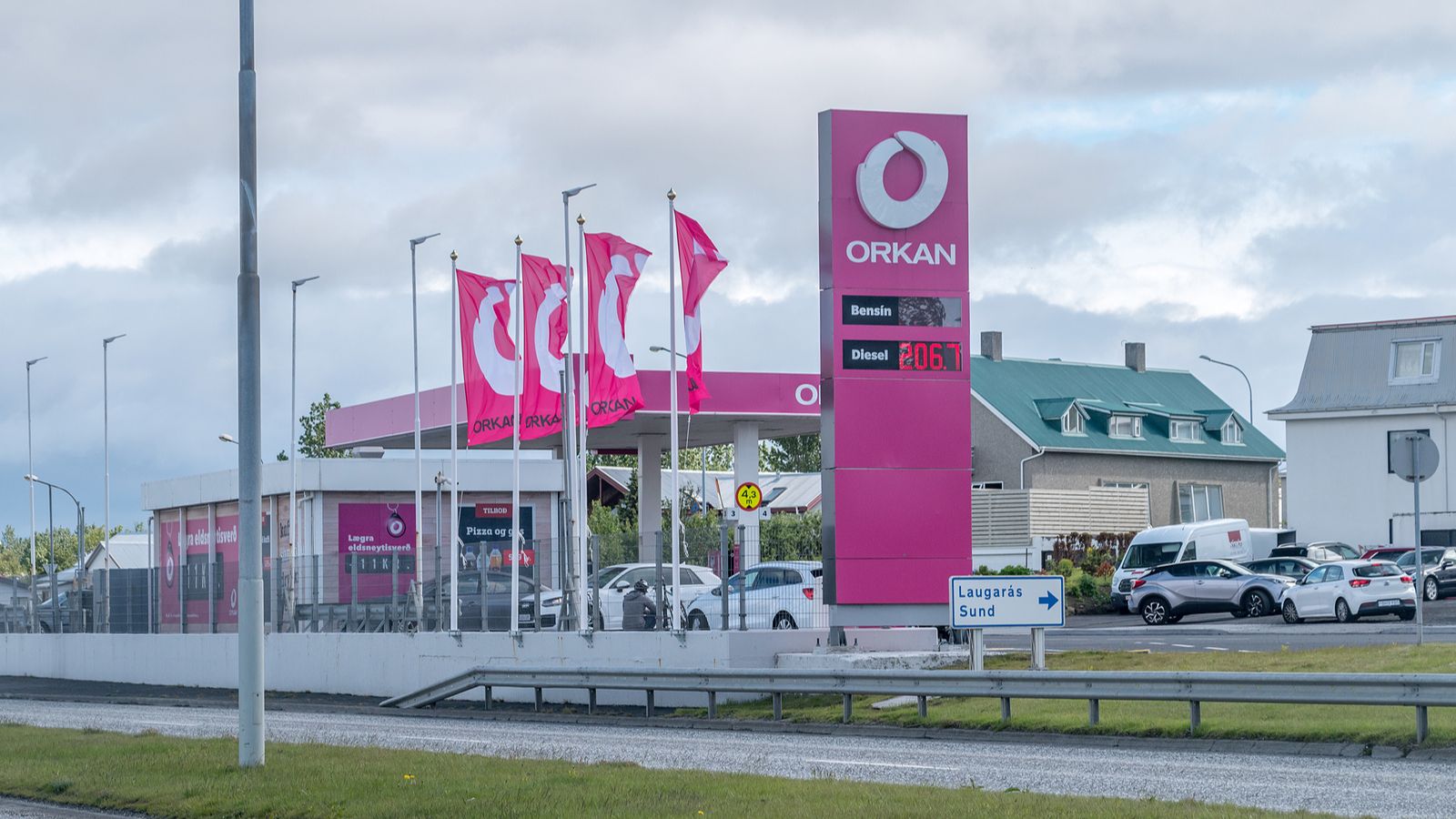
Image Gallery

FAQ

How expensive is fuel in Iceland?

+/-

The cost of fuel in Iceland isn’t cheap. Don’t be surprised if the price tag is higher than you expect, even when filling up a tank on a small city car. Recent figures put average fuel prices at roughly 300-320 ISK per liter ($2.20 - $2.40 USD  per liter). 


Petrol prices will vary from station to station, with higher prices nearer to the capital and lower prices more often displayed further north or east of the country. This is something to factor into your Iceland holiday budget if choosing to hire a car to see the best of Iceland. 


The table below shows examples of recent petrol prices per liter at some of the main chains in Iceland. These are guide figures only, based on 2024-2025 averages rather than live prices.


Fuel Brand

Example price (per liter)

What to expect

Costco

~280 ISK

Typically the cheapest option near Reykjavík. Memberships from the US and UK are recognised.

Orkan

~285 ISK

One of the better value chains, with frequent discounts and unmanned pumps

ÓB (OB)

~285 ISK

The budget brand of Olís, typically priced at the lower end of the market

Atlantsolía

~310 ISK

Competitive unmanned stations, often cheaper than big full-service brands

Olís

~320 ISK

Full-service stations with shops and facilities, usually slightly higher prices

N1

~325 ISK

Very common on main routes, often at the top end of the price range but very convenient


To ensure the most accurate and up-to-date prices during your trip, look at local comparison sites that list current prices by station and region. Use the sites below:


Do you offer fuel discount cards or fobs?

+/-

Yes. Every rental with Iceland Car Rental includes a fuel discount key fob that you can use at Olís and ÓB fuel stations. It gives you money off every liter of fuel at self-service pumps, plus discounts in the station restaurants.

Where are the petrol stations in Iceland?

+/-

There are plenty of petrol stations across the country, with the majority focused near the capital city of Reykjavík and near the Golden Circle, as these are typically the busiest for vehicles in Iceland. 


Map of Gas Stations in Iceland


The map gives a good indication of the number of petrol stations in Iceland and where they are located. When you’re out on the road, Google is a great help if you’re searching for a location for your next fill-up.

Do high fuel prices make an Iceland road trip too expensive?

+/-

Absolutely not. Fuel prices in Iceland might be on the higher side, but it’s worth keeping that in perspective. The country is relatively small, meaning that you won’t be covering huge daily distances and racking up thousands of kilometers. Even a full loop of the Ring Road is about 1,300 km (807 mi), which visitors usually tackle over a week or more.

You can also expect good fuel efficiency while you drive. Main routes are wide and open, with little start-stop traffic, so you won’t drain your tank with constant braking and accelerating. Our rental fleet consists of modern cars that are as economical as possible, helping you to save on fuel costs during your time in Iceland.

Are there gas stations in the Icelandic Highlands and on F-roads?

+/-

No. Once you make your way into the Highlands, the network of F-roads does not have any fuel stations. You’ll need to make sure you fill up before you enter the region and perhaps take additional fuel in canisters with you.

Can I use Apple Pay or Google Pay at gas stations in Iceland?

+/-

Yes, most fuel stations will accept Apple or Google Pay. It’s always a good idea to have a physical card with you, though, just in case there are payment issues or some unmanned stations may not accept it.